Blog - NMBiotech

Blog

Your blog category

Blog

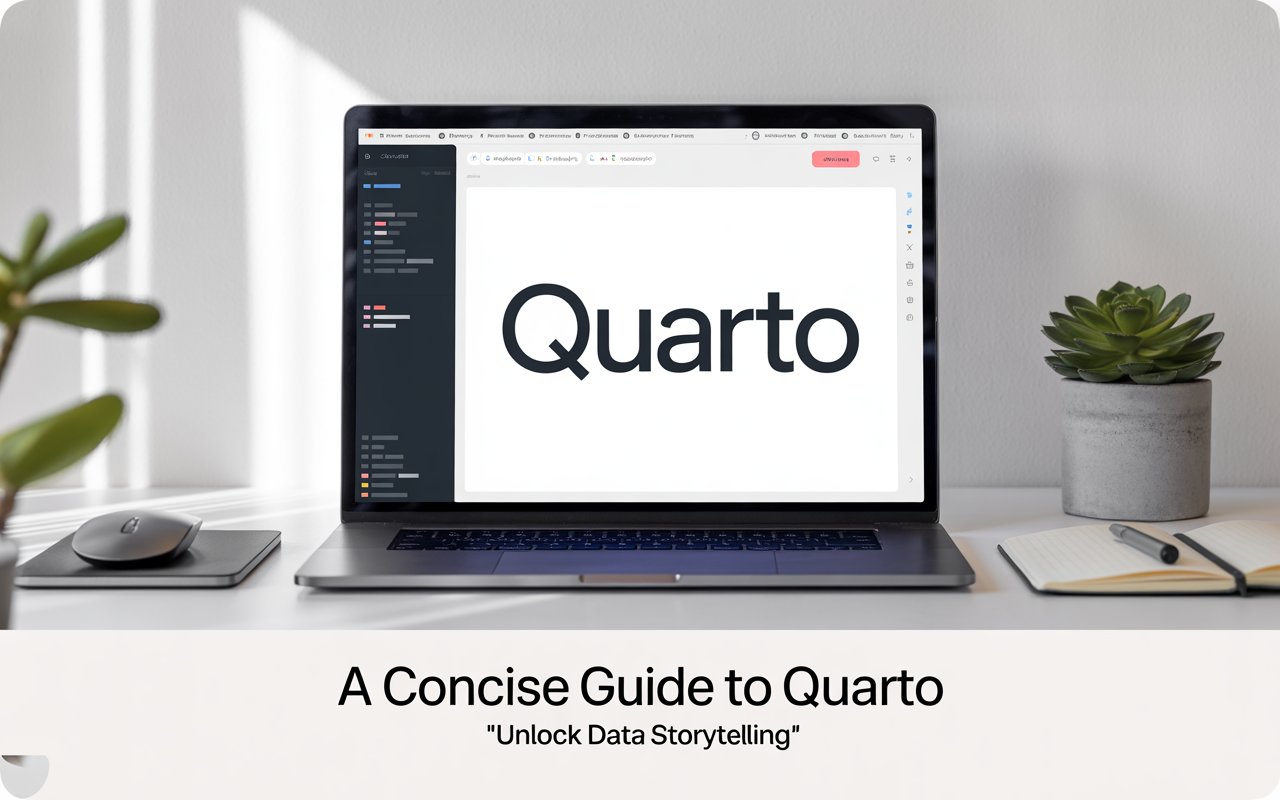
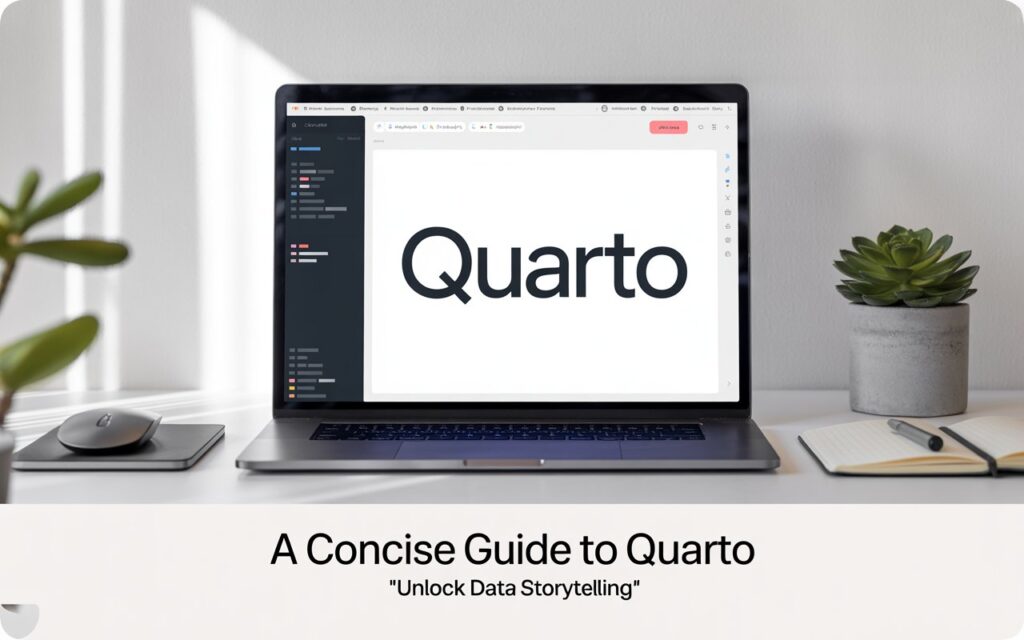
A Concise Guide to Quarto

What is Quarto? Quarto is a powerful tool for data science that helps you create professional documents that combine your code, its results (like plots or tables), and your written explanations all in one place. Think of it as a modern-day digital lab notebook where you can capture exactly what you did and why you did it. It’s not an R package, but a command-line interface (CLI) tool. RStudio, a popular environment for R, automatically handles Quarto for you when needed, so you don’t typically have to install it separately. Why is Quarto useful? Quarto is designed for several key purpose: • Communication: It helps you create reports for decision-makers who want to see your conclusions without getting bogged down in the code. • Collaboration: It’s great for working with other data scientists (including your future self!) because it shows both your findings and the code that led to them. • Reproducibility: Quarto documents are fully reproducible, meaning anyone can run your code and get the exact same results. • Analysis Notebook: It acts as an analysis notebook, helping you record your thoughts and processes, which supports rigorous thinking and makes your work understandable to others. Quarto also builds upon and unifies the functionality of many tools from the R Markdown ecosystem (like rmarkdown, bookdown, distill, xaringan) and extends it to support multiple programming languages like Python and Julia, in addition to R. What does a Quarto file look like? A Quarto file is a plain text file with the extension .qmd. It typically contains three main types of content: 1. YAML Header: An optional section at the top, surrounded by — (three hyphens), that provides metadata and settings for your document, like the title, date, and output format. 2. Code Chunks: Blocks of code (like R code) enclosed by three backticks (“`). These chunks are where you write your analysis code. 3. Text: Your written explanations, mixed with simple text formatting (like # heading for headings or _italics_ for italics). How do you create and work with Quarto documents? You can start a new Quarto document in RStudio by selecting File > New File > Quarto Document…. RStudio offers two main ways to edit these files: • Visual Editor: This is a “What You See Is What You Mean” (WYSIWYM) interface that feels similar to writing in tools like Google Docs or Microsoft Word. You can use buttons on a menu bar or shortcuts to easily insert things like images, tables, and code chunks, and you’ll see your formatting applied directly. • Source Editor: This is a plain text editor, familiar if you’ve written R scripts or R Markdown documents. Here, you directly type Pandoc Markdown syntax for formatting (e.g., *italic* for italic text, ## Heading for a second-level heading). It can be helpful for debugging. You can switch between the visual and source editors. Running Code and Rendering Documents • Code Chunks: You can run code chunks individually by clicking a “Run” icon (a play button) or using the keyboard shortcut Cmd/Ctrl + Shift + Enter. RStudio displays the results right there with your code. • Rendering: To produce a complete report, you click “Render” or press Cmd/Ctrl + Shift + K. This process transforms your .qmd file into your desired output format (like HTML, PDF, or Word). The rendering process involves two main steps: 1. knitr: Your .qmd file is sent to knitr, which executes all the code chunks and creates a new Markdown (.md) document containing your code and its output. 2. pandoc: This Markdown file is then processed by pandoc, which creates the final output file (e.g., HTML, PDF, Word). Important Features and Options Here are some key things you can control in Quarto documents: • Code Chunk Options: You can customise how your code and its results appear in the final document using options in the chunk header (e.g., ““{r} #| label: setup #| include: false` ). Ā Ā Ā Ā ā—¦ eval: false: Prevents code from running and showing any results. Ā Ā Ā Ā ā—¦ include: false: Runs the code but hides both the code and its results from the final document. Useful for setup code. Ā Ā Ā Ā ā—¦ echo: false: Hides the code, but shows the results in the final document. Good for reports where the audience doesn’t need to see the R code. Ā Ā Ā Ā ā—¦ message: false or warning: false: Stops messages or warnings from appearing. Ā Ā Ā Ā ā—¦ error: true: Allows the document to render even if an error occurs in a chunk (useful for debugging). • Global Options: You can set these chunk options for your entire document in the YAML header, under execute or knitr::opts_chunk, so you don’t have to repeat them for every chunk. • Inline Code: You can embed results of R code directly into your text using `r code` (e.g., r nrow(diamonds) will display the number of rows in the diamonds dataset). • Figures: Ā Ā Ā Ā ā—¦ Figures generated by your code will be automatically included. Ā Ā Ā Ā ā—¦ You can control their size and placement using options like fig-width, fig-height, out-width, and fig-align. Ā Ā Ā Ā ā—¦ Add captions with fig-cap. Ā Ā Ā Ā ā—¦ It’s a good idea to name code chunks that produce figures so their filenames are useful. • Tables: Ā Ā Ā Ā ā—¦ You can create markdown tables directly or generate them from code. Ā Ā Ā Ā ā—¦ The knitr::kable() function helps you format tables nicely from R data frames. • Caching: If you have parts of your code that take a long time to run, you can cache their results with cache: true. This means Quarto will only re-run that code if it detects changes, saving you time. You can also specify dependencies between chunks using dependson and track changes to external files with cache.extra. • Self-Contained Documents: For HTML output, you can embed all external dependencies (like images, CSS, JavaScript) directly into the HTML file by setting embed-resources: true in your YAML, making it easier to share via email. • Parameters: You can define parameters in the YAML header (params field) whose values can be changed when you render the report. This is useful for

AI, Blog

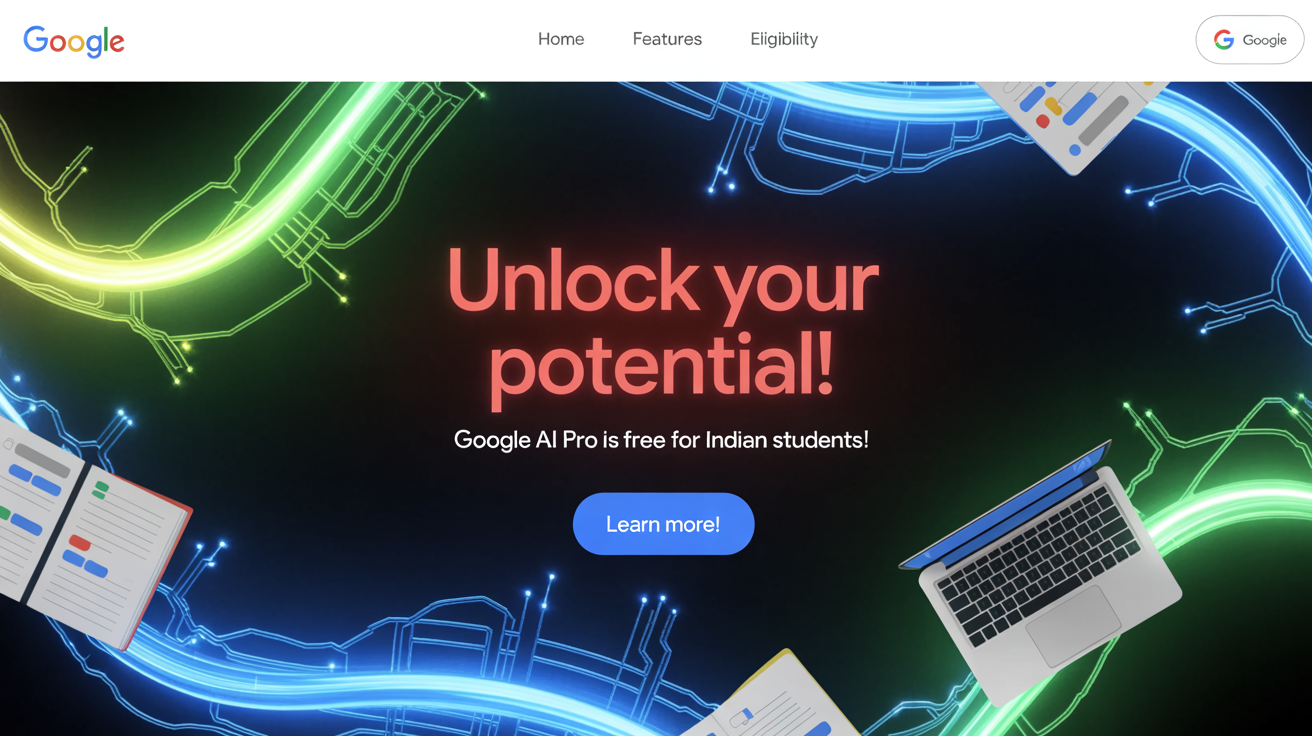
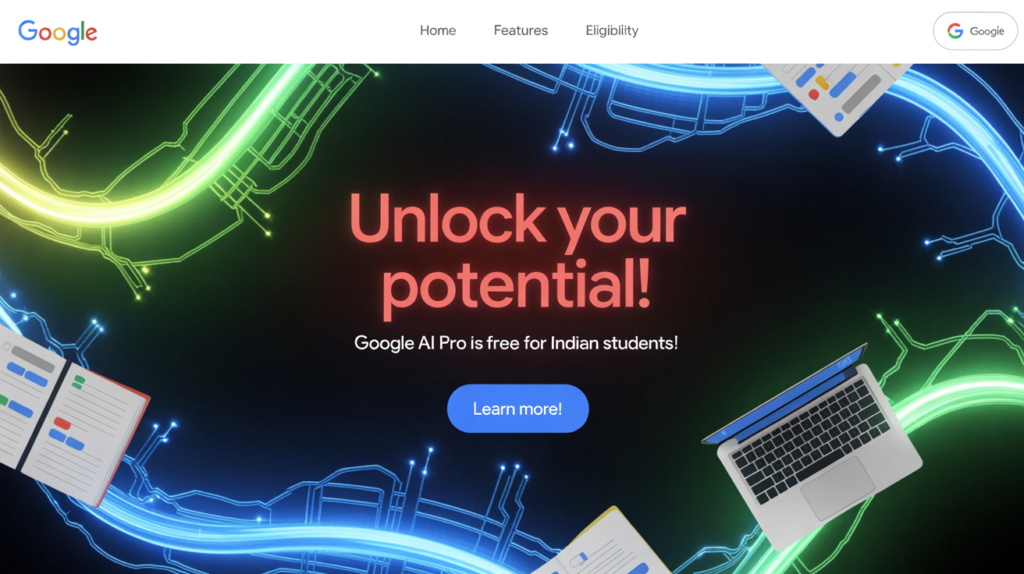
Free Google AI Pro for Indian Students | Unlock Gemini 2.5 Pro & More

Unlock the Future of Learning! Free Google AI Pro for Indian Students! Hey Indian tech enthusiasts and college students, get ready for some truly electrifying news that will supercharge your academic journey! Google is making monumental waves by offering FREE, exclusive access to its highly sought-after Google AI Pro plan – a premium suite of cutting-edge AI tools that typically comes with a hefty annual price tag of ₹19,500! This incredible, game-changing offer is specifically for eligible college students in India, and it’s set to revolutionize the way you learn, create, and organize! What Makes Google AI Pro a Game-Changer for Students? Imagine having a super-powered study buddy, a personal writing coach, and a research assistant all rolled into one – and then some! That’s precisely what Google AI Pro brings to your fingertips. This isn’t just about basic AI; it’s about gaining access to Google’s most advanced artificial intelligence models and features, designed to give Indian students an unbeatable academic advantage, including: * Gemini 2.5 Pro: Your Ultimate AI Study Partner! This is Google’s most capable AI model, offering unparalleled assistance for homework, exam preparation, and writing. Think step-by-step problem-solving, effortlessly generating study guides from your notes, creating personalized practice tests, and even converting complex materials into a podcast format for on-the-go learning! With its massive 1-million-token context window, Gemini 2.5 Pro can handle large amounts of data, allowing you to upload entire textbooks and ask complex questions across multiple chapters. Study smarter, not harder! * Veo 3 Fast: Transform Your Ideas into Dynamic Videos! A groundbreaking video generation model that can turn your text and images into dynamic, professional-quality videos. Get ready to bring your presentations, assignments, and creative projects to life with stunning visuals and captivating motion! * Deep Research: Your Personal Academic Powerhouse! Powered by Gemini 2.5 Pro, this feature helps you condense hours of research into minutes, delivering detailed, cited reports on virtually any topic. Ask follow-up questions to refine your insights and save countless hours on projects. It’s like having a team of dedicated researchers at your fingertips! * NotebookLM with Enhanced Limits: Organize Your Genius! This AI-powered research assistant is getting a significant boost with 5x higher limits for notebooks and sources, making it an even more powerful tool for organizing, synthesizing, and making sense of your notes and research materials. Say goodbye to scattered thoughts and hello to streamlined productivity! * Seamless AI Integration Across Google Apps: Experience intelligent AI assistance directly within your favorite Google apps like Gmail, Docs, Sheets, and Slides. Draft compelling content, generate data insights, streamline tasks, and enhance your overall productivity like never before. From composing emails to creating powerful presentations, AI has your back! * 2TB Cloud Storage: Never Worry About Space Again! The AI Pro plan includes a generous 2TB of cloud storage across Google Drive, Gmail, and Google Photos. This ensures all your assignments, projects, research, and precious memories are safely backed up and accessible anywhere. Who Can Unlock This Amazing Google AI Offer in India? This fantastic opportunity is specifically for college students in India who meet these straightforward criteria: * You must be at least 18 years old. * You must be enrolled in a recognized Indian institution. * You must verify your student status through SheerID verification on Google One. * You must sign up before September 15, 2025. This date is crucial – don’t miss out! Important Note for Indian Students: You’ll need to use your personal Gmail accounts for registration, not university-issued Google Workspace accounts. While a payment method is required for the trial purchase flow, absolutely no charges will be applied during this incredible free 12-month period. It’s genuinely a risk-free way to supercharge your studies! Why is Google Empowering Students with Free AI Pro Access? This incredible initiative by Google underscores its deep commitment to empowering the next generation of learners and innovators in India. By providing free access to these cutting-edge AI tools, Google aims to equip students with the resources they need to excel academically, unleash their creativity, and confidently prepare for a future where AI plays an increasingly vital role. A recent study by Google and Kantar even indicated that 95% of Indian students using Gemini feel more confident in their daily lives, highlighting the overwhelmingly positive impact these advanced tools can have on your confidence and capabilities. Don’t Miss Out! Claim Your Free Google AI Pro Access Today! If you’re an eligible student, this is an opportunity you simply cannot afford to miss! Head over to Google One, verify your student status, and unlock a full year of powerful AI features that will undoubtedly transform your academic journey and creative endeavors. This limited-time offer is an absolute game-changer for students in India – so seize this chance before September 15, 2025! Are you absolutely thrilled about this offer? How do you plan to use these incredible Google AI Pro features to boost your studies, enhance your projects, and gain an academic edge? Share your exciting plans in the comments below! What is Agentic AI?

Synthetic Human DNA Project
Blog, Biotech Trends

Synthetic Human DNA Project: Scientists Begin Work to Create Artificial Human DNA

From Reading to Writing Life: Synthetic Human DNA Project Launches in the UK. In a groundbreaking move, researchers in the UK have launched the world’s first serious effort to build human DNA from scratch. Backed by a Ā£10 million investment from the Wellcome Trust, this new frontier in synthetic biology—the Synthetic Human Genome Project—has the potential to revolutionize medicine, aging, and our understanding of life itself. But with such power comes serious ethical questions. Is this a leap toward life-saving innovation—or the opening of Pandora’s box? Let’s explore what this new research means for the future of humanity. šŸ”¬ What Is the Synthetic Human DNA Project? The goal of this project is not just to read DNA, as scientists did during the Human Genome Project (completed 25 years ago), but to build it molecule by molecule, synthetically. Every human cell (except red blood cells) contains DNA—a double-stranded molecule made of four bases: A, T, G, and C. These form the code that builds and regulates every biological function. Until now, we’ve studied this code. But this project aims to construct synthetic versions of human chromosomes—which could then be used to study, repair, and eventually replace faulty genes. This isn’t science fiction. It’s happening now, and it could lead to therapies for incurable diseases, age-related degeneration, and even organ regeneration. 🧪 Why Build Human DNA from Scratch? According to Dr. Julian Sale from the MRC Laboratory of Molecular Biology in Cambridge, this is biology’s ā€œnext giant leap.ā€ He says the project will pave the way for: Creating disease-resistant cells Regenerating damaged organs like the liver or heart Improving immune system function Supporting healthy aging with fewer chronic illnesses The synthetic chromosomes could help scientists test hypotheses that are currently impossible to verify by tweaking existing DNA. It offers unprecedented precision and may even lead to designing personalized DNA for therapeutic purposes. 🧠 The Ethical Debate: Hope or Danger? While many scientists see the project as a historic opportunity, ethicists and activists are sounding alarms. Critics worry about: The commercialization of synthetic human parts The potential for ā€œdesigner babiesā€ or gene-enhanced humans Future misuse in biowarfare or genetic weaponization Dr. Pat Thomas of the campaign group Beyond GM warns that even good science can be ā€œrepurposed for harm,ā€ especially if misused by governments or corporations. Professor Bill Earnshaw, a geneticist from Edinburgh University, echoed these fears: ā€œThe genie is out of the bottle.ā€ 🧫 What Are the Scientists Doing Right Now? At this early stage, the project is confined to labs—no synthetic humans are being created, nor is the goal to make synthetic life. Instead, researchers are focused on: Developing tools to assemble larger and more accurate segments of human DNA Creating synthetic chromosomes to better understand gene function and repair mechanisms Conducting all experiments in test tubes or Petri dishes, not inside living organism The research is also coupled with a dedicated social science program, led by Prof. Joy Zhang at the University of Kent. The goal is to include public perspectives and ethical considerations alongside scientific progress. šŸ’¬ Why Did Wellcome Trust Fund This Controversial Project? According to Dr. Tom Collins, who approved the funding at Wellcome Trust, the team weighed the risks of action vs. inaction. ā€œThis technology will eventually be developed,ā€ he said. ā€œBy supporting it now, we can shape it responsibly and confront the ethical questions proactively.ā€ Their hope is that early transparency, ethics-focused research, and social dialogue will guide the science toward healing, not harm. šŸŒ What Does This Mean for the Future? This project represents the next phase in synthetic biology and bioinformatics. It connects multiple disciplines: Gene editing (like CRISPR) Synthetic genome assembly Personalized regenerative medicine Ethical AI and biotech regulation If successful, this research could offer new therapies for cancer, genetic diseases, and aging, while raising serious questions about the limits of human enhancement and bioethics. **************************** So, scientists are now building human DNA from scratch. No big deal… just casually rewriting the code of life like it’s a Python script. On the bright side, we might finally get a cure for rare genetic diseases. On the weird side, someone’s probably already planning a glow-in-the-dark human or a lab-grown superhero. šŸ¦øā€ā™‚ļø But in all seriousness, this is one of those moments in science where you stop and think: ā€œWow… we can do that now?ā€ The line between innovation and sci-fi is getting blurrier by the day. Let’s just hope this technology stays in responsible hands—because while CRISPR can fix a gene, it can’t fix a bad idea. As we step into the synthetic age of biology, maybe we don’t need to panic— …but just to keep one eye on the Petri dish. šŸ‘€šŸ§¬ šŸ”” Follow me for more updates on the wild, wonderful, and sometimes weird world of biotech, bioinformatics, and health tech.

Major Breakthroughs in Biotechnology & Gene Editing
Biotech Trends, Blog

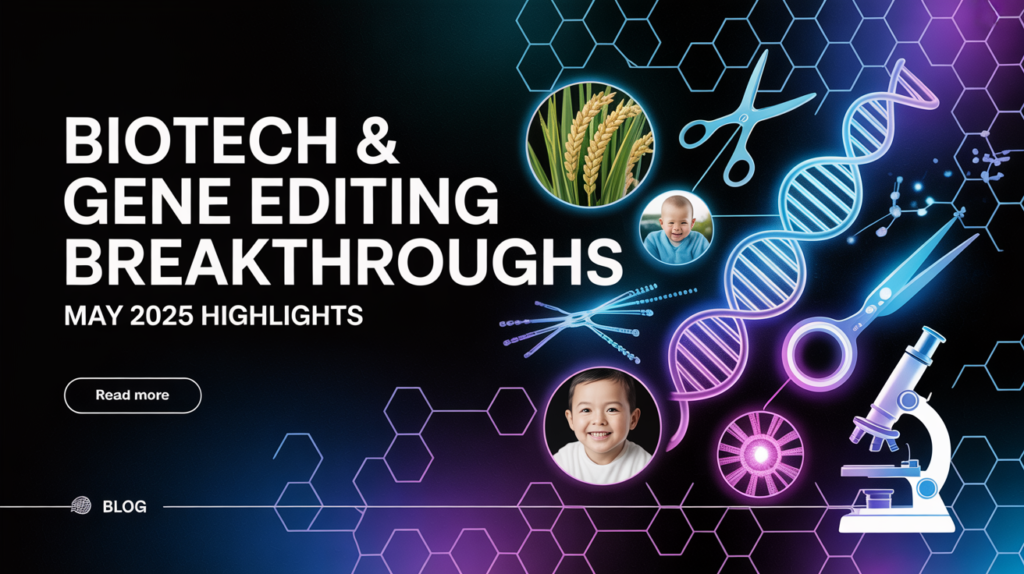
Major Breakthroughs in Biotechnology & Gene Editing – May 2025

🧬 Major Breakthroughs in Biotechnology & Gene Editing – May 2025Ā have delivered historic moments—from personalized CRISPR treatments to gene-edited rice revolutionizing agriculture. Let’s explore the top five developments transforming science, medicine, and the world around us. šŸ§’ 1. CRISPR Cures Infant in World-First Personalized Gene Therapy In a global first, CRISPR-Cas9 was used to treat a newborn suffering from carbamoyl phosphate synthetase 1 (CPS1) deficiency—a rare, life-threatening metabolic disorder. The treatment was personalized, targeting the baby’s specific genetic mutation. What makes this achievement groundbreaking? Scientists used lipid nanoparticles to deliver the CRISPR components into the baby’s liver cells. The gene-editing occurred in vivo (inside the body), rather than extracting cells and modifying them in a lab. Within days, the baby showed normalized ammonia levels—a sign that the therapy worked. This breakthrough redefines the scope of personalized medicine and sets the stage for treating countless other genetic disorders with custom-designed gene-editing solutions. šŸ”— External Source – The Times UK 🌾 2. Gene-Edited Rice: Less Water, More Yield In a pioneering step towards sustainable agriculture, India’s ICAR institutes released two new rice varieties: DRR Dhan 100 (Kamala) Pusa DST Rice 1 These were developed using genome editing techniques (SDN-1 CRISPR-Cas9), making them non-GMO in regulatory terms but enhanced for performance. Key highlights: Require 30% less water than traditional rice. More resistant to climate change impacts. Improved yields under drought and heat stress. The release is a massive leap for climate-smart farming, especially relevant for countries battling water scarcity and food insecurity. šŸ”— Indian Express Coverage šŸ”¬ 3. TIGR-Tas: A New Gene Editing System Without PAM The biotech world just got a new superstar: TIGR-Tas. Discovered by researchers at MIT and the Broad Institute, TIGR-Tas is a dual-spacer-guided genome editing system that does not require PAM sequences. This gives it a major edge over CRISPR-Cas9, which can only target DNA sites near a PAM. What makes TIGR-Tas a breakthrough? Targets more regions of the genome. Reduced off-target effects. Potential for editing previously untouchable genes. TIGR-Tas could revolutionize fields like oncology, rare disease therapy, and bioengineering, especially when precision and flexibility are critical. šŸ”— Wikipedia – TIGR-Tas 🧫 4. AI Finds New Antibiotic from Mammoth DNA In an awe-inspiring discovery, scientists combined machine learning with woolly mammoth DNA to develop a new antibiotic: Mammuthusin. Here’s how it happened: Researchers analyzed ancient genes for antimicrobial potential. AI predicted structural peptides with antibiotic properties. Mammuthusin was synthesized and tested—proving effective against multiple drug-resistant bacteria. This signals a major shift in how we discover antibiotics: Less trial-and-error. Use of extinct genomes as unexplored libraries. Combating superbugs with post-genomic era tools. This is also a potential model for the future of bioinformatics + AI drug discovery. šŸš€ 5. NASA Accidentally Discovers Bacteria That Can Survive on Mars In an unexpected twist, NASA’s Jet Propulsion Laboratory (JPL) found 26 new microbial species—in the most sterilized labs on Earth. Why it matters: These bacteria survived in ultra-clean rooms built to avoid contamination. Some species demonstrated traits like radiation resistance, low-nutrient survival, and even dormancy triggers—characteristics that resemble extremophile survival. NASA is now investigating: Whether these organisms could survive Martian conditions. If they can be used for space biotech, like terraforming or producing oxygen and nutrients on other planets. šŸ”— Economic Times Report šŸ” Why These Biotechnology and Gene Editing Breakthroughs in May 2025 Matter Each of these discoveries reflects how far we’ve come in just one month. From personalized medicine to sustainable food, from new editing systems to AI-enabled antibiotics, the intersection of biotech and AI is driving health tech and global innovation. If you’re a student, professional, or just a curious mind in the bioinformatics and health tech space, now is the time to stay updated and engaged. šŸ”— Also Read: 5 Open-Source Bioinformatics Tools You Need in 2025 🧭 Conclusion: What’s Next? As we step deeper into 2025, the pace of innovation is only accelerating. The breakthroughs in biotechnology and gene editing this May signal a future where diseases are curable, crops are climate-proof, and space may be the next biotech frontier. Stay tuned to nmbiotech as we continue to decode the future of science.

Agentic AI vs Generative AI
AI in Bio, Blog

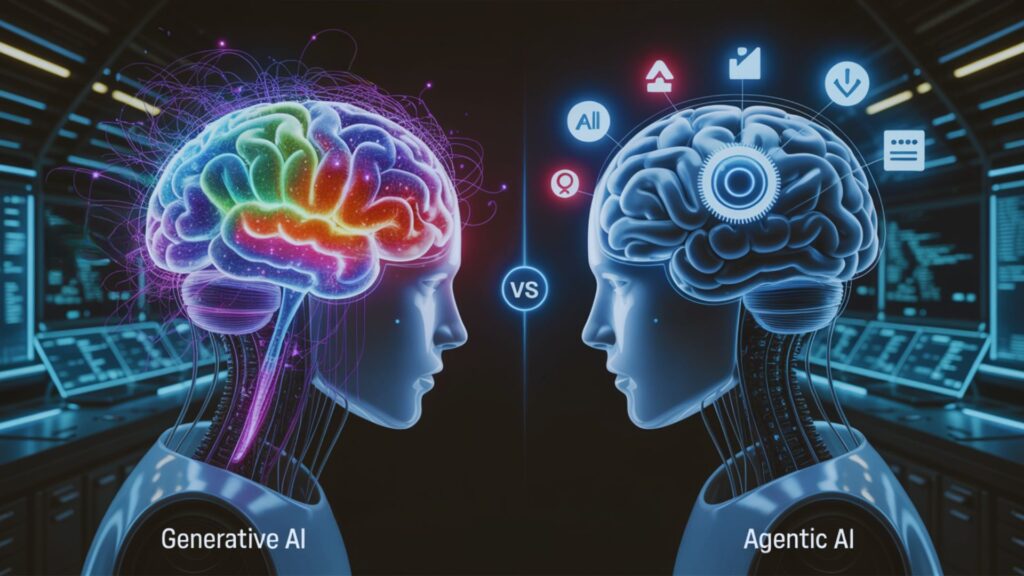
Agentic AI vs Generative AI: Difference, and Why

Agentic AI vs Generative AI:Ā  Difference, and Why It Matters for the Future of Healthcare and Tech Artificial Intelligence (AI) is changing everything—from how we chat online to how we discover new medicines. You’ve probably heard of tools like ChatGPT or DALLĀ·E that can write stories or generate cool images. These are part of what we call Generative AI. But now, there’s a new kind of AI making waves. It’s called Agentic AI, and it could completely change how we work, research, and even take care of our health. Let’s break it down in a simple way šŸ‘‡ šŸ¤– What Is Generative AI? Generative AI is great at creating things: It can write text, like emails or blog posts. It can generate images, like artworks or scientific illustrations. It can predict structures, like how a protein might fold in the body. It’s smart, creative, and helpful—but it still needs you to ask the right questions or give clear commands. Examples include: ChatGPT (like the one you’re reading from šŸ˜‰) DALLĀ·E (makes images from text) AlphaFold (predicts protein structures) 🧠 What Is Agentic AI? Agentic AI vs Generative AI Agentic AI takes things to a whole new level. It doesn’t just wait for your instructions—it acts like an assistant that can think, plan, and get things done on its own. Imagine telling your AI:“I want to analyze some health data and create a report.” Instead of just giving you a text or answer, Agentic AI will: Decide what steps are needed Open the right tools Run the analysis Write the report And maybe even email it for you! It’s like hiring a mini digital co-worker who never sleeps. Examples: Devin AI (the first AI software engineer) AutoGPT (AI that can plan and complete tasks by itself) Coming soon: healthcare agents that help with diagnosis and treatment plans 🧬 Why This Matters in Healthcare & Biology AI is already helping in areas like: Finding new drugs Analyzing genetic data Helping doctors make decisions faster But with Agentic AI, things get even more exciting: AI can run full research projects by itself It can automate hospital paperwork It might even help diagnose rare diseases quickly and more accurately This could make healthcare faster, cheaper, and smarter—especially in countries with fewer doctors or medical staff. šŸš€ What’s Next? The future is not just about smarter AI, but more independent AI. Think of it like this: Agentic AI vs Generative AI Generative AI = Super smart assistant Agentic AI = Super smart co-worker that can manage things without you Together, they could change how we work, learn, heal, and innovate. šŸ’” Final Thoughts We’re entering a new era where AI doesn’t just assist—it acts. And in fields like healthcare, bioinformatics, and technology, that could be a game-changer. So whether you’re a student, tech enthusiast, or just curious about the future—this is your moment to get ahead. šŸ‘‰ Follow @nmbiotech for more clear, exciting, and powerful content at the intersection of biology, technology, and the future. Because the future isn’t just human.It’s human + AI. And that’s powerful. šŸ”— Useful Links OpenAI Research – Generative AI AlphaFold – Protein Structure Prediction AutoGPT GitHub šŸ”— Internal Links What Is Bioinformatics? Home

About Us

Lorem ipsum dolor sit amet, consectetur adipiscing elit. Ut elit tellus, luctus nec ullamcorper mattis, pulvinar dapibus leo.

Departments

Who Are We

Our Mission

Awards

Experience

Success Story

Quick Links

Who Are We

Our Mission

Awards

Experience

Success Story

Recent news

  • All Post
  • AI in Bio
  • Biotech Trends
  • Blog
    •   Back
    • AI

Ā© 2023 Created @NMBiotech

Scroll to Top